
India's Labour Laws Just Got a Major Makeover: What It Means for Businesses, Workers, and MSMEs
India has replaced 29 labour laws with four simplified labour codes. This blog breaks down the key changes in wages, work hours, leave rules, and worker protection, and shows how employers, workers, and MSMEs can stay compliant under the new labour laws.

On 21st November 2025, India stepped into a new chapter of labour reform.
The government replaced 29 separate labour laws with four unified labour codes that promise simpler compliance, clearer rights, and better transparency.
For companies like Floww — and for the thousands of MSMEs we work with — this is an important shift. These changes don’t just affect HR paperwork; they reshape how businesses hire, manage, and care for their people.
The Four Labour Codes
Explained Simply
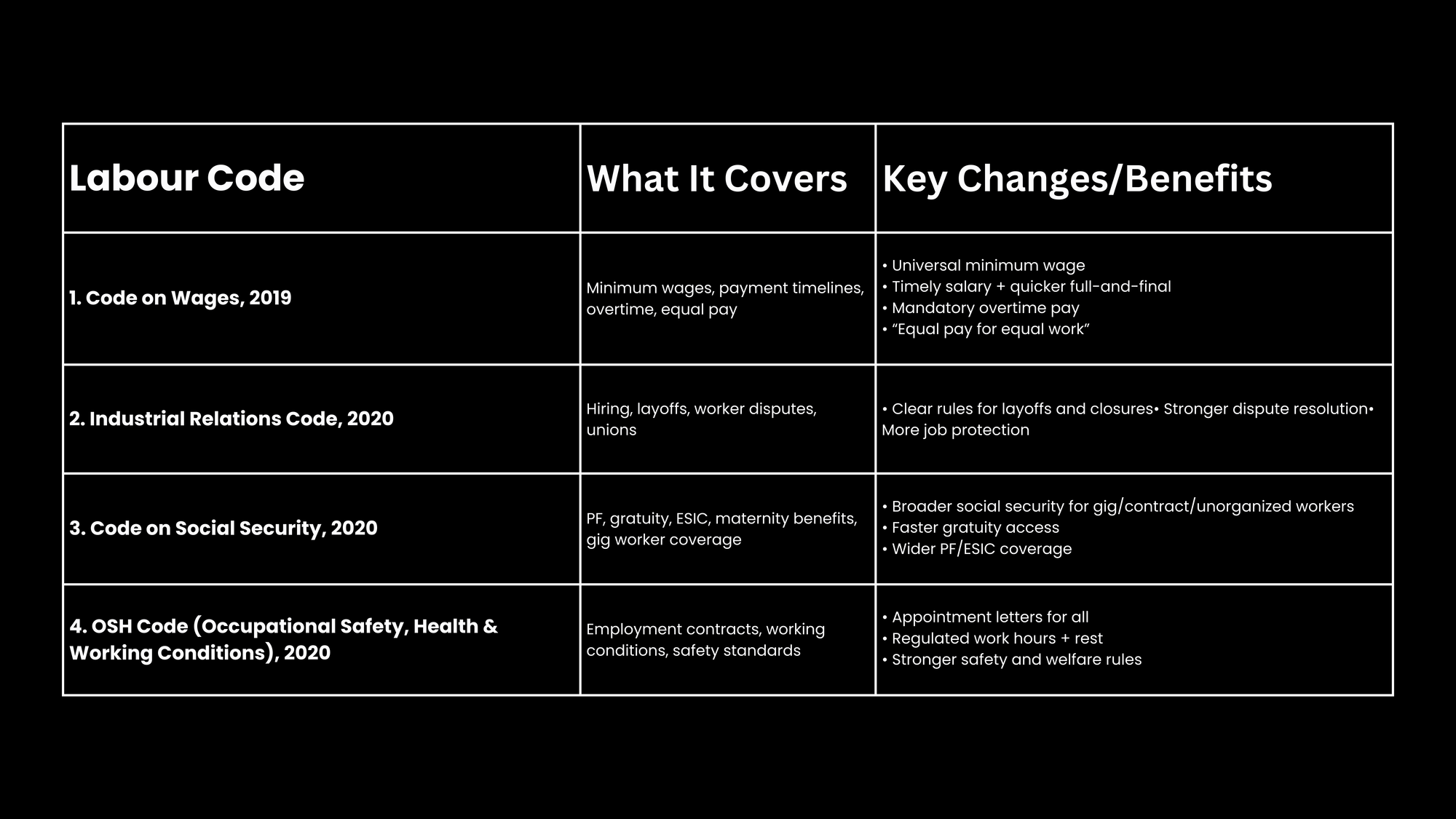
To make things clearer, here’s a quick comparison table summarising each code:
Work Hours and Leave Rules Under the New Codes
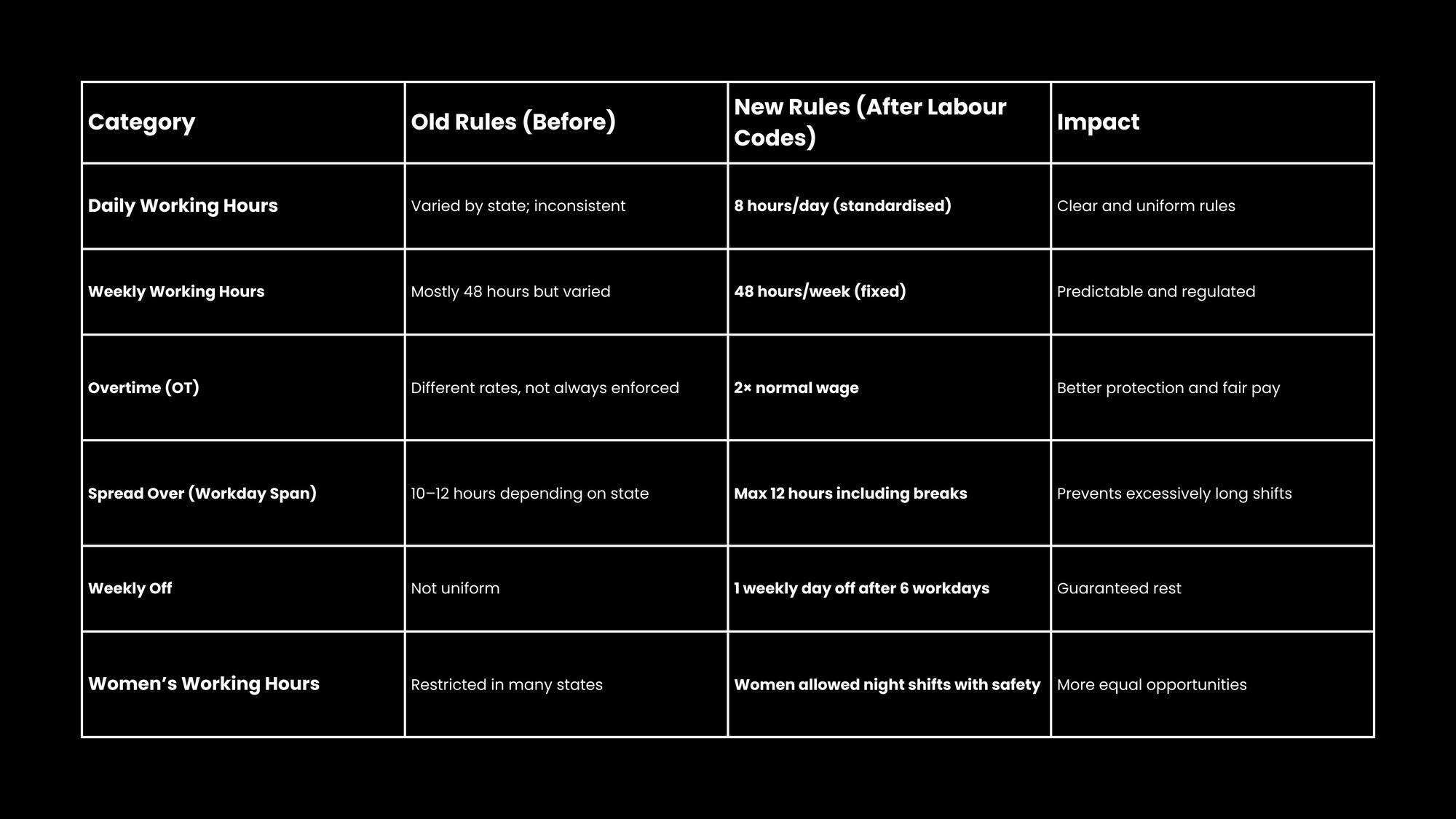
The new labour codes also redefine how long employees can work, how overtime is paid, and how leave is managed.
Here is a clean, separate table:
Work Hours Under the New Labour Codes
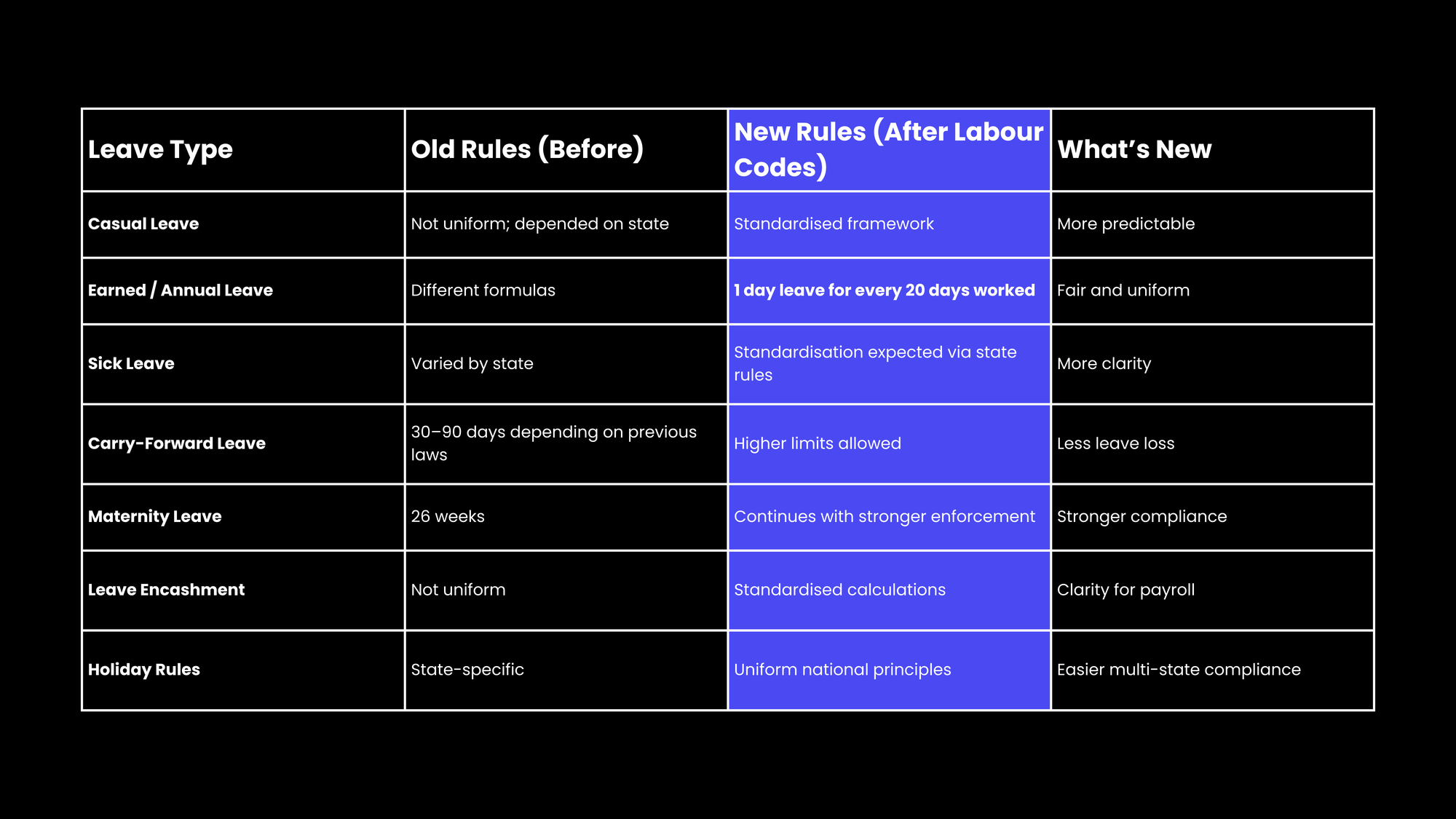
Leave Rules Under the New Labour Codes (Before vs. After)
Each type of leave is now more structured and transparent.
How to Prepare for the New Labour Codes (Do This:)
Implementation is the real challenge. Here’s a simple action plan for each group.
For Employees
Do This
- Collect your appointment letter if missing.
- Understand your salary structure (what counts as “basic wage”).
- Check your eligibility for PF, ESIC, gratuity, and maternity benefits.
- Note the new rules for working hours and overtime.
- Maintain your own attendance and overtime records.
- Ask HR for clarity wherever needed.
For Employers
Do This
- Issue appointment letters to everyone — including contract and gig workers.
- Restructure salaries according to the new wage definition.
- Update HR policies on working hours, leave, overtime, and safety.
- Ensure PF, ESIC, and gratuity compliance for all eligible categories.
- Adopt a modern HRMS system (like Atom HR) to avoid manual errors.
- Set up a clear dispute resolution process as required by law.
- Train HR and admin teams on the new compliance rules.
For Business Owners (MSMEs)
Do This
- Categorize your workforce properly — permanent, contract, gig, part-time.
- Prepare for higher social security contributions if applicable.
- Automate payroll and compliance to avoid penalties.
- Communicate policy changes clearly to all staff.
- Improve workplace safety standards to meet OSH requirements.
- Track state-wise notifications because implementation may vary.
Why These Reforms Matter
The older labour laws were written over several decades and often overlapped, causing confusion and compliance issues.
The new codes aim to:
- Simplify the legal framework
- Reduce paperwork
- Protect workers more effectively
- Align India with global labour standards
- Support business growth with predictable rules
This shift especially benefits MSMEs by giving them clarity — something that was missing for years.
What Companies Should Do Now
If you're a business owner or HR leader, here’s what you should prioritise:
- Review all employment documents — appointment letters, contracts, and policies.
- Align salary structures with the new wage definition.
- Ensure all statutory benefits are being applied correctly.
- Update workplace safety norms as required under the OSH Code.
- Train your team so they understand what’s changing.
- Use technology to maintain error-free compliance.
Conclusion
The four new labour codes represent one of the biggest labour reforms India has ever seen.
They bring clarity, fairness, and modernisation — offering workers better protection and helping businesses operate with fewer legal uncertainties.
For companies like Floww that support MSMEs in their growth journey, these changes are more than legal updates — they are an opportunity to build stronger workplaces, deeper trust, and better long-term stability.